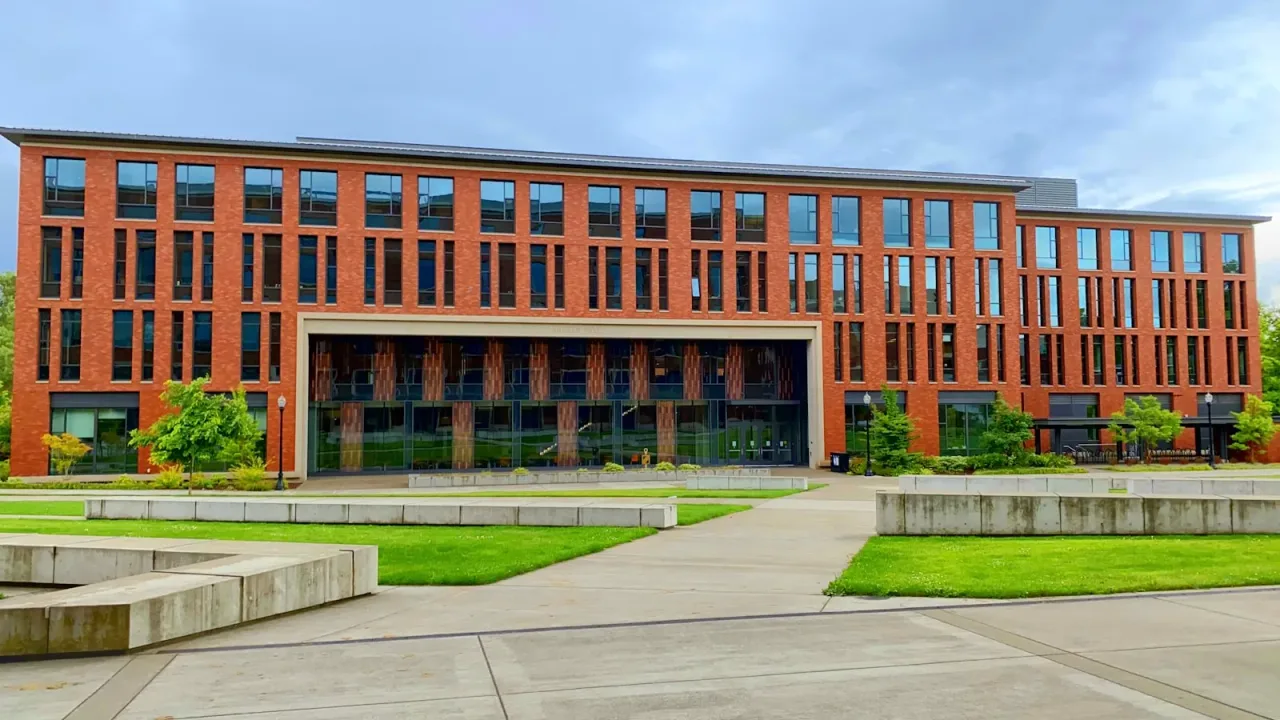
Room assignments
First year: Twin or triple-sharing is standard. Minimal choice. Floor and roommate assigned by college. Room sizes 100-150 sqft typical.
Second year onwards: Most IITs and IIITs offer single rooms by default. Most NITs and private colleges retain twin-sharing through 4 years with limited single-room availability for senior students. Single AC rooms at private colleges cost INR 1.5-2.5 lakh/year vs twin INR 1-1.5 lakh.
Key amenities expected: Cot, mattress, study desk, wardrobe, attached or shared bathroom (newer blocks attached, older blocks shared), 100 Mbps Wi-Fi, AC backup or cooler in older blocks. Premium colleges (MIT WPU, BITS Pilani Hyderabad) include AC as standard.
Mess food
Standard mess offers 4 daily meals: breakfast (7:30-9:30 AM), lunch (12-2:30 PM), tea + snacks (4-5:30 PM), dinner (7:30-9:30 PM).
Cuisine rotations vary by region:
- Karnataka: South Indian (idli, dosa, rice + sambar) + North Indian (chapati, dal, sabji) rotation, with Tulu/Mangalorean influence at coastal colleges, Lingayat influence in Hubli/Belgaum. Vidyasiri scholarships subsidize SC/ST/OBC students.
- Maharashtra: Marathi authentic + North Indian + South Indian + Continental. Pune colleges (MIT WPU, Vishwakarma) have stronger continental rotation.
- Tamil Nadu: Tamil authentic (sambar, rasam, kuzhambu) + North Indian + Continental. SSN, Thiagarajar, PSG have strong tea/Tamil snack culture.
- Bengal: Bengali authentic + North Indian. IEM Kolkata, Heritage have strong bhaat-mach (rice + fish curry) rotation.
- North Indian colleges: Punjabi + UP + Bihari rotation + Continental. JIIT Noida, IIT Kanpur strong on Mughlai.
- Northeast: Local cuisine + standard rotation. NIT Sikkim, NIT Manipur, IIIT Guwahati have unique regional menus.
Most colleges have separate Jain counter (no onion-garlic), and many premium private colleges have dedicated international cuisine (Chinese, Italian, Mexican rotations).
Mess fees: INR 35,000-72,000/year. IITs/NITs lower (INR 35-48K); private colleges higher (INR 50-72K).
Rules and curfew
Curfew (gates close):
- Boys: 10:30-11:00 PM at most colleges. IITs/IIITs midnight. Some private colleges (BITS Pilani, MIT Manipal) flexible 11:30 PM.
- Girls: 9:30-10:30 PM at most colleges. Stricter than boys universally.
Out-pass for late nights: All colleges require parental call-back protocol. Some require physical out-pass form. Not used casually — used 2-3 times per semester for events, weddings, family emergencies.
In-room rules: Smoking, alcohol, drugs strictly prohibited (zero tolerance). Cooking in rooms prohibited (kitchen/induction not allowed). Music after 11 PM prohibited. No outside guests after 7 PM (men hostels), 6 PM (women hostels).
Visitor policy: Parents allowed 9 AM - 6 PM. Friends allowed 4-7 PM in common visitor areas only.
Hostel costs (2026-27)
| Tier | AC twin/year | Non-AC twin/year | Mess/year |
|---|---|---|---|
| IIT/NIT | N/A (mostly non-AC + cooler) | INR 35-50K | INR 35-48K |
| IIIT (PPP) | INR 75-95K | N/A | INR 48-65K |
| Tier-1 private (BITS, VIT, SRM, MIT WPU) | INR 1.4-2.0 lakh | INR 95K-1.10 lakh | INR 60-75K |
| Tier-2 Karnataka private | INR 80K-1.30 lakh | INR 50-70K | INR 45-58K |
| Tier-3 Karnataka private | INR 65-95K | INR 40-55K | INR 40-52K |
| Government engineering | INR 50-65K | INR 30-45K | INR 35-45K |
Practical tips for new students
- Get a 5-litre water can subscription (INR 35-40 per fill). Hostel taps unsafe. Most hostels have water purifiers but room access varies.
- Buy a small fridge (INR 4,000-7,000). Snacks, fruits, leftovers. Cooler if AC included; just fridge if non-AC.
- Power strip with surge protector (INR 500). Multiple devices (laptop + phone + lamp + fan).
- Mess card — single-meal-per-day mess card if your college allows. Some colleges allow students to skip meals on weekends without paying for those.
- Locker — always lock cupboard. Theft from common rooms is rare but happens.
- Local SIM — for safety and emergencies. Family in-state SIM may not work optimally.
- First-aid kit — basic medicines (paracetamol, antacids, ORS, antiseptic). Hostel medical room hours limited.
Hostel vs PG / day-scholar in Bangalore
Hostel: INR 95K-2.0 lakh/year all-in; structured environment; mandatory at most colleges first year; limited freedom.
PG (Bangalore): INR 12,000-25,000/month = INR 1.4-3 lakh/year; non-veg flexibility; outside food easy; freedom to come/go; longer commute risk.
Day-scholar (Bangalore-based students): No hostel/PG cost; commute via metro/bus 30-90 minutes; saves INR 1-2 lakh/year; misses social/networking benefits of hostel life.
Common student concerns
Roommate compatibility: Colleges typically allow room change once per semester after first 2 weeks. Talk to wardens.
Mess food quality: Most colleges have mess committees with student representation. File grievances at start of semester.
Bullying/ragging: All colleges have anti-ragging cells. SOS via UGC anti-ragging helpline 1800-180-5522. IITs/IIITs/NITs have zero-tolerance enforcement.
Mental health: Most colleges have counselling cells. IITs and top NITs have psychiatrists on retainer. Use them — not weakness.